
Every time we walk into a shopping centre, a hospital or an airport, we subconsciously assess how easy it is to find our way. Good navigation is not just signs and maps but a complex system that has to work invisibly and effectively. When it is done well, we barely think about it. The moment confusion appears, though, the inconvenience becomes obvious: extra loops, irritation and lost time.
Creating genuinely convenient navigation takes more than installing new signs or adding maps. You have to understand how visitors interact with the space, what difficulties they run into and what can be improved. This is where metrics come in — the tools that let you measure how well navigation performs.
Where work with metrics begins
It begins with setting goals. Imagine you want to cut the time visitors spend looking for a particular shop in a mall. Or, in a hospital, to reduce the number of questions about how to find a given department. In each case you need to define exactly what will be measured: user satisfaction, the number of wrong turns, time to reach the destination, or even how often people ask for help.
Measurement tools
Next you choose the right instruments. Questionnaires and surveys reveal how satisfied people are with the navigation system. Observation and tracking show how they move through the space: where they get lost, where they spend too long. To analyse how understandable the signs are, focus-group testing is useful — studying how people read symbols and text.
Large spaces such as airports or major shopping centres call for automation. Video analytics, QR codes and NFC tags record visitor movement. Interactive panels and apps make it possible to gather feedback in real time, which is particularly useful for keeping the data current.
What to do with the data
Once you have the data, visualise it. Charts and dashboards show how effectively the system works: how much time visitors spend navigating, how often they find the right place on the first attempt, how satisfied they are with the outcome. These indicators let you see progress and respond quickly to problems.
The work does not end there. Navigation is a dynamic system that has to change along with the space. If a shopping centre adds new zones or shops, the map and the signs must adapt too. A Plan–Do–Check–Act approach helps: define what needs improving, roll out the change, check the results, adjust the strategy.
Why it is worth it
All of this sounds complicated, but the results justify the effort. In a shopping centre, convenient navigation increases the time visitors spend inside and their overall satisfaction. In a hospital it reduces the load on staff, freeing up doctors’ and administrators’ time. In an airport it minimises the stress of passengers who no longer get lost looking for their gate.
Creating effective visual navigation is more than a technical task. It is a way to make people’s interaction with a space simpler, more comfortable and more pleasant — and therefore not only to improve their experience but to strengthen trust in the organisation that looks after its visitors.
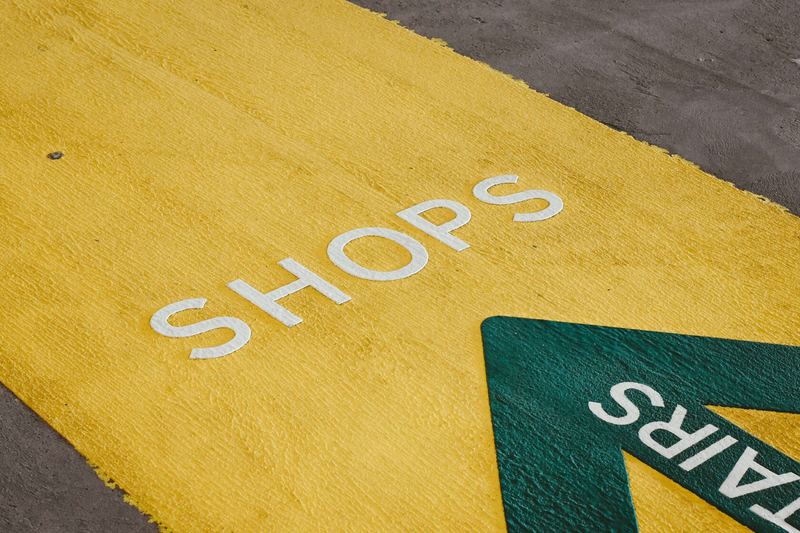
Photo by Nik on Unsplash